" width="512px"><path d="M 0 512 L 0 0 L 512 0 L 512 512 Z" fill="transparent" height="512px" id="ZgeQxKH1h" width="512px"/><path d="M 256 512 C 397.385 512 512 397.385 512 256 C 512 114.615 397.385 0 256 0 C 114.615 0 0 114.615 0 256 C 0 397.385 114.615 512 256 512 Z" fill="rgb(109, 165, 68)" height="512px" id="kr39BIdIS" width="512px"/><path d="M 211.478 0 L 422.956 155.826 L 211.478 311.652 L 0 155.826 Z" fill="rgb(255, 218, 68)" height="311.65200000000004px" id="oY3wGrzfT" transform="translate(44.522 100.174)" width="422.956px"/><path d="M 89.043 178.086 C 138.22 178.086 178.086 138.22 178.086 89.043 C 178.086 39.866 138.22 0 89.043 0 C 39.866 0 0 39.866 0 89.043 C 0 138.22 39.866 178.086 89.043 178.086 Z" fill="rgb(240, 240, 240)" height="178.086px" id="NXjBT5u3D" transform="translate(166.957 166.957)" width="178.086px"/><path d="M 44.493 0 C 29.009 0 14.066 2.355 0 6.725 C 0.623 55.365 40.227 94.609 89.015 94.609 C 119.183 94.609 145.827 79.592 161.934 56.641 C 134.377 22.144 91.976 0 44.493 0 Z" fill="rgb(0, 82, 180)" height="94.60899999999998px" id="YuM_1pp4I" transform="translate(166.985 250.435)" width="161.93399999999997px"/><path d="M 169.218 106.103 C 170.29 100.579 170.869 94.88 170.869 89.043 C 170.869 39.865 131.003 0 81.826 0 C 45.132 0 13.632 22.201 0 53.899 C 12.05 51.402 24.526 50.087 37.305 50.087 C 89.022 50.086 135.808 71.584 169.218 106.103 Z" fill="rgb(0, 82, 180)" height="106.10300000000001px" id="YS5disLCa" transform="translate(174.175 166.957)" width="170.86899999999997px"/></g></svg>)
" width="512px"><path d="M 0 512 L 0 0 L 512 0 L 512 512 Z" fill="transparent" height="512px" id="sU1f5KEx8" width="512px"/><path d="M 256 512 C 397.385 512 512 397.385 512 256 C 512 114.615 397.385 0 256 0 C 114.615 0 0 114.615 0 256 C 0 397.385 114.615 512 256 512 Z" fill="rgb(240, 240, 240)" height="512px" id="Ib8DzdOKC" width="512px"/><path d="M 0 66.783 L 267.13 66.783 C 267.13 43.677 264.05 21.293 258.311 0 L 0 0 Z" fill="rgb(216, 0, 39)" height="66.78299999999999px" id="wedNo7NCA" transform="translate(244.87 189.217)" width="267.13px"/><path d="M 0 66.783 L 229.556 66.783 C 213.885 41.211 193.848 18.608 170.486 0 L 0 0 Z" fill="rgb(216, 0, 39)" height="66.783px" id="D01TuqLvR" transform="translate(244.87 55.652)" width="229.55599999999998px"/><path d="M 159.356 55.652 C 219.605 55.652 274.982 34.828 318.712 0 L 0 0 C 43.73 34.828 99.107 55.652 159.356 55.652 Z" fill="rgb(216, 0, 39)" height="55.65199999999999px" id="LfMa1Y7dC" transform="translate(96.644 456.348)" width="318.712px"/><path d="M 28.755 66.783 L 465.607 66.783 C 478.188 46.254 487.945 23.814 494.362 0 L 0 0 C 6.417 23.814 16.174 46.254 28.755 66.783 Z" fill="rgb(216, 0, 39)" height="66.78300000000002px" id="Bh__GhB8l" transform="translate(8.819 322.782)" width="494.36190999999997px"/><path d="M 118.584 39.978 L 141.913 39.978 L 120.213 55.743 L 128.502 81.252 L 106.803 65.487 L 85.104 81.252 L 92.264 59.215 C 73.158 75.13 56.412 93.776 42.612 114.552 L 50.087 114.552 L 36.274 124.587 C 34.122 128.177 32.058 131.824 30.08 135.525 L 36.676 155.826 L 24.37 146.885 C 21.311 153.366 18.513 159.993 15.998 166.758 L 23.265 189.126 L 50.087 189.126 L 28.387 204.891 L 36.676 230.4 L 14.977 214.635 L 1.979 224.079 C 0.678 234.537 0 245.189 0 256 L 256 256 C 256 114.616 256 97.948 256 0 C 205.428 0 158.285 14.67 118.584 39.978 Z M 128.502 230.4 L 106.803 214.635 L 85.104 230.4 L 93.393 204.891 L 71.693 189.126 L 98.515 189.126 L 106.803 163.617 L 115.091 189.126 L 141.913 189.126 L 120.213 204.891 Z M 120.213 130.317 L 128.502 155.826 L 106.803 140.061 L 85.104 155.826 L 93.393 130.317 L 71.693 114.552 L 98.515 114.552 L 106.803 89.043 L 115.091 114.552 L 141.913 114.552 Z M 220.328 230.4 L 198.629 214.635 L 176.93 230.4 L 185.219 204.891 L 163.519 189.126 L 190.341 189.126 L 198.629 163.617 L 206.917 189.126 L 233.739 189.126 L 212.039 204.891 Z M 212.039 130.317 L 220.328 155.826 L 198.629 140.061 L 176.93 155.826 L 185.219 130.317 L 163.519 114.552 L 190.341 114.552 L 198.629 89.043 L 206.917 114.552 L 233.739 114.552 Z M 212.039 55.743 L 220.328 81.252 L 198.629 65.487 L 176.93 81.252 L 185.219 55.743 L 163.519 39.978 L 190.341 39.978 L 198.629 14.469 L 206.917 39.978 L 233.739 39.978 Z" fill="rgb(0, 82, 180)" height="256px" id="PiPMDdnMm" width="256px"/></g></svg>)

About Lionel University
About Lionel University
Ambrozios Institute and Lionel University: the partnership that opens the doors of the United States and Canada for Brazilians in fitness
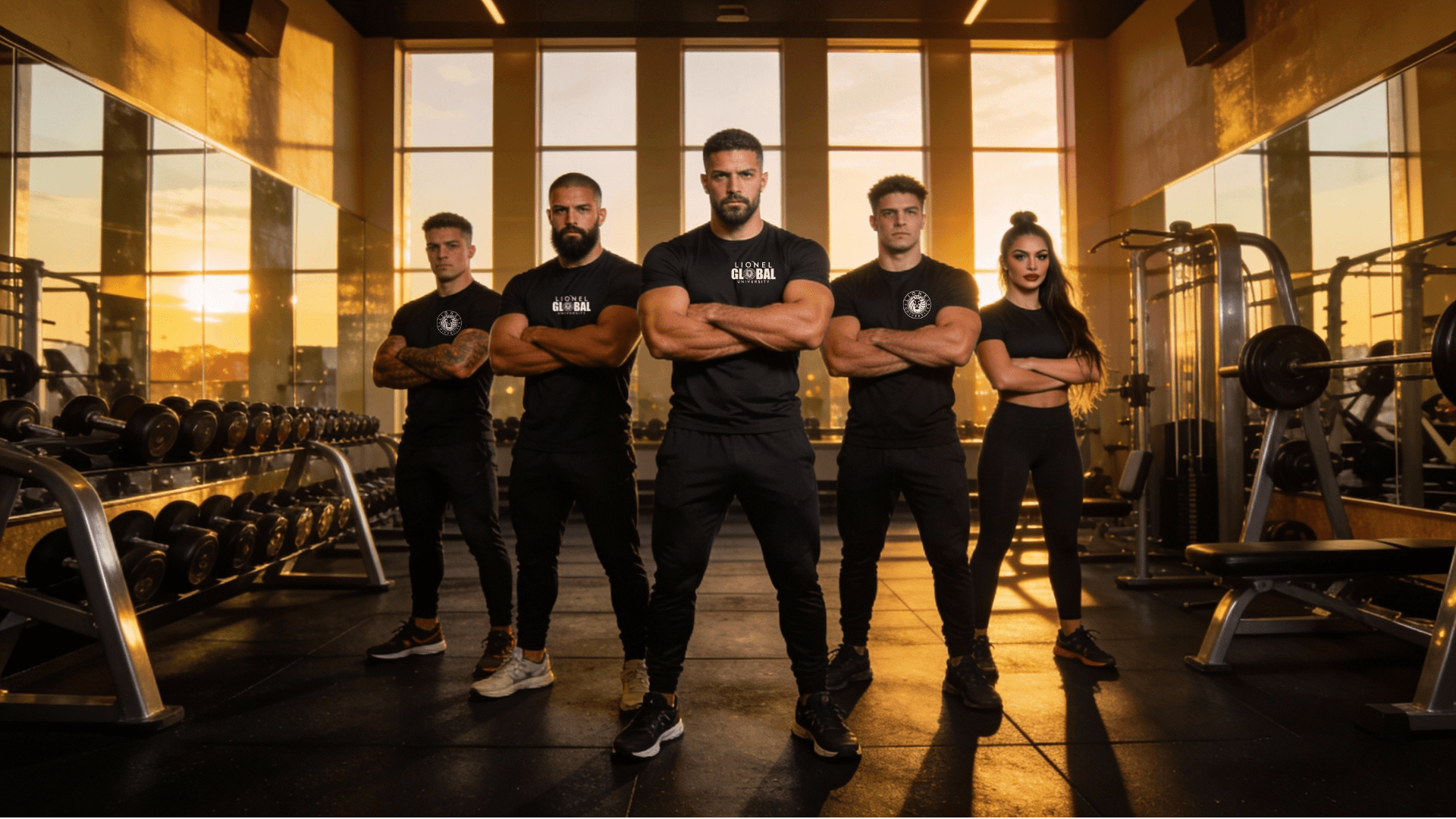
Lionel University, formerly known as ISSA College of Exercise Science, is a 100% online American university, specialized in health, fitness, and human performance.
Ambrozios Institute and Lionel University: the partnership that opens the doors of the United States and Canada for Brazilians in fitness
Lionel University, formerly known as ISSA College of Exercise Science, is a 100% online American university, specialized in health, fitness, and human performance.
Market Recognition fitness
Market Recognition fitness
The fitness market in North America is experiencing a moment of high professional appreciation. The United States and Canada are facing a shortage of qualified professionals while demanding strong, recognized credentials that align with university standards.
The fitness market in North America is experiencing a moment of high professional appreciation. The United States and Canada are facing a shortage of qualified professionals while demanding strong, recognized credentials that align with university standards.

Our certification also strengthens your profile for immigration.
Our certification also strengthens your profile for immigration.
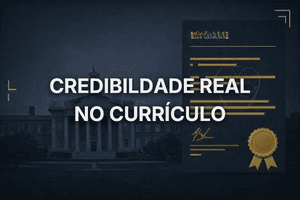
Improve Your Resume
Improve your Resume
Official accreditation
DEAC
Official accreditation
DEAC
The university is accredited by the Distance Education Accrediting Commission, an agency recognized by the U.S. Department of Education and CHEA.
This ensures that the institution is official, regulated, and follows the American educational standard.
The university is accredited by the Distance Education Accrediting Commission, an agency recognized by the U.S. Department of Education and CHEA.
This ensures that the institution is official, regulated, and follows the American educational standard.
What does this mean for you?
What does this mean for you?



Course Content
Details
Online access to the exclusive platform. Content will be made available in English and Portuguese, divided into 10 sections with quizzes and the final exam.
Prerequisites
To receive your official Personal Trainer Certificate from Lionel University, a valid CPR/AED certificate is required.
This course combines exercise science with practical coaching techniques.
Anatomy, Physiology, and Biomechanics
Understanding how the body moves and functions.
Nutrition and Behavior Coaching
Guide clients with solid nutritional strategies.
Training Programming
Develop effective and safe workouts for different clients.
Training Programming
Develop effective and safe workouts for different clients.
Professionalism and Ethics
Act with integrity and maintain the trust of clients.
Customer Reviews
Perform physical assessments and create personalized programs.
Training for Special Populations
Working with the elderly, young people, and individuals with medical conditions.
Business and Marketing Skills
Learn to attract and retain customers.
INCLUDED
CPR/AED Course
Valid certificate to be able to receive the official Personal Trainer Certificate from Lionel University
Qualifying Final Exam
The final step to obtaining your Certified Personal Trainer credential is the Qualification Exam.
2 hours (120 minutes) to answer 100 questions
3 attempts to complete the exam
Carefully review your study materials before attempting the exam.
Summary
Section 1
1.1 - The Genesis of Physical Training
1.2 - Rise of the Professional Personal Trainer: Standards, Certification, and the Role of Lionel University
1.3 - Movements and Methodologies of Fitness: From Aerobics to Fitness Influencer
1.4 - Science of Exercise Today: Cutting-Edge Research and Future Directions
1.5 - Building on the Legacy: Shaping the Future of Personal Training
Quiz 1
Section 2
2.1 - Introduction to Anatomy and Body Systems
2.2 - The Nervous System
2.3 - The Muscular and Skeletal Systems
2.4 - Metabolism and Energy Systems
2.5 - Fundamentals of Post-Exercise Recovery
Quiz 2
Section 3
3.1 - Muscular Roles and Joint Actions: Coordinating Movement
3.2 - Main Muscle Groups: Driving Fundamental Movements
3.3 - The 7 Pillars of Movement: Fundamental Patterns of Human Movement
3.4 - Beyond the 7 Pillars: Fundamentals of Activation, Isolation, and Corrective Exercise
3.5 - Equipment Modalities
Quiz 3
Section 4
4.1 - Principles of Programming and Acute Variables
4.2 - Components of a Workout
4.3 - Motor Learning and Movement Skill Development
4.4 - Results-Based Programming
4.5 - The FIT-PRO Coaching Model
Quiz 4
Section 5
5.1 - Navigating the Initial Consultation with the Client
5.2 - Risk Stratification and Screening Tools
5.3 - Physical Fitness and Movement Assessments
5.4 - Data Collection and Interpretation
5.5 - Using Feedback to Guide Programming
Quiz 5
Section 6
6.1 - Mastery of Macronutrients: Carbohydrates
6.2 - Macronutrient Mastery: Fats
6.3 - Mastery of Macronutrients: Proteins
6.4 - Hydration for Health: Water and Beyond
6.5 - Dominance of Micronutrients: Vitamins and Minerals
Quiz 6
Section 7
7.1 - Fitness Strategies for Obesity and Diabetes
7.2 - Cardiovascular Disease, Hypertension, and Heart Health
7.3 - Exercising with Orthopedic Concerns
7.4 - Training the Aging Client: Movement, Strength, and Cognitive Health
7.5 - Adaptive Fitness: Supporting Unique Needs
Quiz 7
Section 8
8.1 - Fundamentals of Behavioral Change in Coaching
8.2 - Transtheoretical Model and the Stages of Change
8.3 - Change Processes: Facilitating Forward Movement
8.4 - Motivational Interviewing: Core Skills (OARS)
8.5 - Evoking a Speech of Change and Building Commitment
Quiz 8
Section 9
9.1 - Client Consultations and Building Rapport
9.2 - Designing the Vision: Outlining Success
9.3 - Ensuring Commitment: The Art of Closing
9.4 - Dealing with Objections and Enrollment Conversations
9.5 - Personal Training Marketing and Building a Personal Brand
Quiz 9
Section 10
10.1 - Using Wearable Technology and Fitness Apps in Client Programs
10.2 - Online and Hybrid Training Models
10.3 - Staying Relevant: Trends, Research, and Continuing Education
10.4 - Professional Growth, Networking, and Career Longevity
10.5 - Practice with Purpose: Your Next Chapter and Course Conclusion
Quiz 10
Course Content
Details
Online access to the exclusive platform. Content will be made available in English and Portuguese, divided into 10 sections with quizzes and the final exam.
Prerequisites
To receive your official Personal Trainer Certificate from Lionel University, a valid CPR/AED certificate is required.
This course combines exercise science with practical coaching techniques.
Anatomy, Physiology, and Biomechanics
Understanding how the body moves and functions.
Nutrition and Behavior Coaching
Guide clients with solid nutritional strategies.
Training Programming
Develop effective and safe workouts for different clients.
Training Programming
Develop effective and safe workouts for different clients.
Professionalism and Ethics
Act with integrity and maintain the trust of clients.
Customer Reviews
Perform physical assessments and create personalized programs.
Training for Special Populations
Working with the elderly, young people, and individuals with medical conditions.
Business and Marketing Skills
Learn to attract and retain customers.
INCLUDED
CPR/AED Course
Valid certificate to be able to receive the official Personal Trainer Certificate from Lionel University
Qualifying Final Exam
The final step to obtaining your Certified Personal Trainer credential is the Qualification Exam.
2 hours (120 minutes) to answer 100 questions
3 attempts to complete the exam
Carefully review your study materials before attempting the exam.
Summary
Section 1
1.1 - The Genesis of Physical Training
1.2 - Rise of the Professional Personal Trainer: Standards, Certification, and the Role of Lionel University
1.3 - Movements and Methodologies of Fitness: From Aerobics to Fitness Influencer
1.4 - Science of Exercise Today: Cutting-Edge Research and Future Directions
1.5 - Building on the Legacy: Shaping the Future of Personal Training
Quiz 1
Section 2
2.1 - Introduction to Anatomy and Body Systems
2.2 - The Nervous System
2.3 - The Muscular and Skeletal Systems
2.4 - Metabolism and Energy Systems
2.5 - Fundamentals of Post-Exercise Recovery
Quiz 2
Section 3
3.1 - Muscular Roles and Joint Actions: Coordinating Movement
3.2 - Main Muscle Groups: Driving Fundamental Movements
3.3 - The 7 Pillars of Movement: Fundamental Patterns of Human Movement
3.4 - Beyond the 7 Pillars: Fundamentals of Activation, Isolation, and Corrective Exercise
3.5 - Equipment Modalities
Quiz 3
Section 4
4.1 - Principles of Programming and Acute Variables
4.2 - Components of a Workout
4.3 - Motor Learning and Movement Skill Development
4.4 - Results-Based Programming
4.5 - The FIT-PRO Coaching Model
Quiz 4
Section 5
5.1 - Navigating the Initial Consultation with the Client
5.2 - Risk Stratification and Screening Tools
5.3 - Physical Fitness and Movement Assessments
5.4 - Data Collection and Interpretation
5.5 - Using Feedback to Guide Programming
Quiz 5
Section 6
6.1 - Mastery of Macronutrients: Carbohydrates
6.2 - Macronutrient Mastery: Fats
6.3 - Mastery of Macronutrients: Proteins
6.4 - Hydration for Health: Water and Beyond
6.5 - Dominance of Micronutrients: Vitamins and Minerals
Quiz 6
Section 7
7.1 - Fitness Strategies for Obesity and Diabetes
7.2 - Cardiovascular Disease, Hypertension, and Heart Health
7.3 - Exercising with Orthopedic Concerns
7.4 - Training the Aging Client: Movement, Strength, and Cognitive Health
7.5 - Adaptive Fitness: Supporting Unique Needs
Quiz 7
Section 8
8.1 - Fundamentals of Behavioral Change in Coaching
8.2 - Transtheoretical Model and the Stages of Change
8.3 - Change Processes: Facilitating Forward Movement
8.4 - Motivational Interviewing: Core Skills (OARS)
8.5 - Evoking a Speech of Change and Building Commitment
Quiz 8
Section 9
9.1 - Client Consultations and Building Rapport
9.2 - Designing the Vision: Outlining Success
9.3 - Ensuring Commitment: The Art of Closing
9.4 - Dealing with Objections and Enrollment Conversations
9.5 - Personal Training Marketing and Building a Personal Brand
Quiz 9
Section 10
10.1 - Using Wearable Technology and Fitness Apps in Client Programs
10.2 - Online and Hybrid Training Models
10.3 - Staying Relevant: Trends, Research, and Continuing Education
10.4 - Professional Growth, Networking, and Career Longevity
10.5 - Practice with Purpose: Your Next Chapter and Course Conclusion
Quiz 10
Course Content
Details
Online access to the exclusive platform. Content will be made available in English and Portuguese, divided into 10 sections with quizzes and the final exam.
Prerequisites
To receive your official Personal Trainer Certificate from Lionel University, a valid CPR/AED certificate is required.
This course combines exercise science with practical coaching techniques.
Anatomy, Physiology, and Biomechanics
Understanding how the body moves and functions.
Nutrition and Behavior Coaching
Guide clients with solid nutritional strategies.
Training Programming
Develop effective and safe workouts for different clients.
Training Programming
Develop effective and safe workouts for different clients.
Professionalism and Ethics
Act with integrity and maintain the trust of clients.
Customer Reviews
Perform physical assessments and create personalized programs.
Training for Special Populations
Working with the elderly, young people, and individuals with medical conditions.
Business and Marketing Skills
Learn to attract and retain customers.
INCLUDED
CPR/AED Course
Valid certificate to be able to receive the official Personal Trainer Certificate from Lionel University
Qualifying Final Exam
The final step to obtaining your Certified Personal Trainer credential is the Qualification Exam.
2 hours (120 minutes) to answer 100 questions
3 attempts to complete the exam
Carefully review your study materials before attempting the exam.
Summary
Section 1
1.1 - The Genesis of Physical Training
1.2 - Rise of the Professional Personal Trainer: Standards, Certification, and the Role of Lionel University
1.3 - Movements and Methodologies of Fitness: From Aerobics to Fitness Influencer
1.4 - Science of Exercise Today: Cutting-Edge Research and Future Directions
1.5 - Building on the Legacy: Shaping the Future of Personal Training
Quiz 1
Section 2
2.1 - Introduction to Anatomy and Body Systems
2.2 - The Nervous System
2.3 - The Muscular and Skeletal Systems
2.4 - Metabolism and Energy Systems
2.5 - Fundamentals of Post-Exercise Recovery
Quiz 2
Section 3
3.1 - Muscular Roles and Joint Actions: Coordinating Movement
3.2 - Main Muscle Groups: Driving Fundamental Movements
3.3 - The 7 Pillars of Movement: Fundamental Patterns of Human Movement
3.4 - Beyond the 7 Pillars: Fundamentals of Activation, Isolation, and Corrective Exercise
3.5 - Equipment Modalities
Quiz 3
Section 4
4.1 - Principles of Programming and Acute Variables
4.2 - Components of a Workout
4.3 - Motor Learning and Movement Skill Development
4.4 - Results-Based Programming
4.5 - The FIT-PRO Coaching Model
Quiz 4
Section 5
5.1 - Navigating the Initial Consultation with the Client
5.2 - Risk Stratification and Screening Tools
5.3 - Physical Fitness and Movement Assessments
5.4 - Data Collection and Interpretation
5.5 - Using Feedback to Guide Programming
Quiz 5
Section 6
6.1 - Mastery of Macronutrients: Carbohydrates
6.2 - Macronutrient Mastery: Fats
6.3 - Mastery of Macronutrients: Proteins
6.4 - Hydration for Health: Water and Beyond
6.5 - Dominance of Micronutrients: Vitamins and Minerals
Quiz 6
Section 7
7.1 - Fitness Strategies for Obesity and Diabetes
7.2 - Cardiovascular Disease, Hypertension, and Heart Health
7.3 - Exercising with Orthopedic Concerns
7.4 - Training the Aging Client: Movement, Strength, and Cognitive Health
7.5 - Adaptive Fitness: Supporting Unique Needs
Quiz 7
Section 8
8.1 - Fundamentals of Behavioral Change in Coaching
8.2 - Transtheoretical Model and the Stages of Change
8.3 - Change Processes: Facilitating Forward Movement
8.4 - Motivational Interviewing: Core Skills (OARS)
8.5 - Evoking a Speech of Change and Building Commitment
Quiz 8
Section 9
9.1 - Client Consultations and Building Rapport
9.2 - Designing the Vision: Outlining Success
9.3 - Ensuring Commitment: The Art of Closing
9.4 - Dealing with Objections and Enrollment Conversations
9.5 - Personal Training Marketing and Building a Personal Brand
Quiz 9
Section 10
10.1 - Using Wearable Technology and Fitness Apps in Client Programs
10.2 - Online and Hybrid Training Models
10.3 - Staying Relevant: Trends, Research, and Continuing Education
10.4 - Professional Growth, Networking, and Career Longevity
10.5 - Practice with Purpose: Your Next Chapter and Course Conclusion
Quiz 10